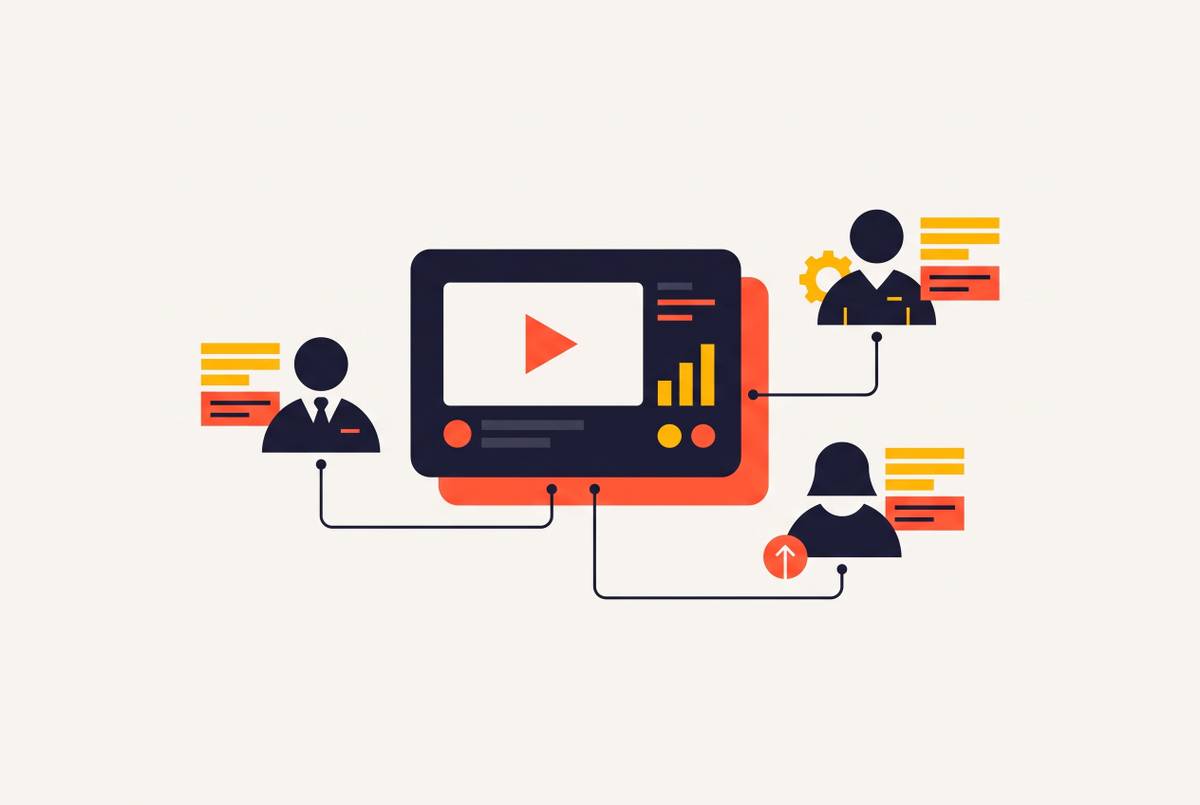
Narration vs. Text-Only Product Demos
Choose your demo format based on where buyers are in their journey, not on format alone.
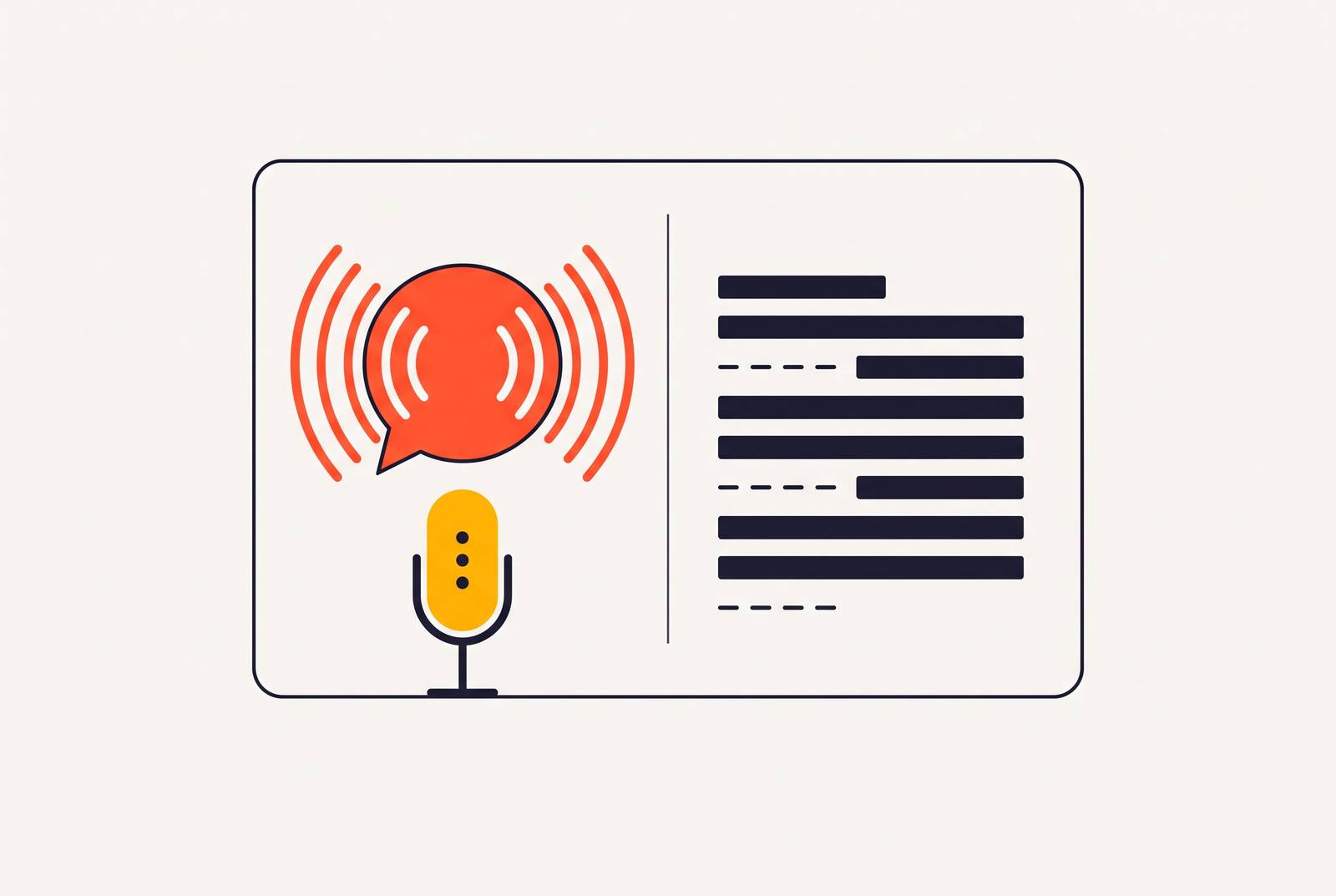
Narrated demos and text-only demos both win, depending on what you're asking them to do. That's the entire argument of this piece, and it's a more useful starting point than picking a side. Storylane's 2026 analysis makes a sharp case here: lumping every demo format into one bucket and asking which performs better produces a number that sounds precise and means almost nothing, because different buying moments call for genuinely different formats. The more useful question is which format wins where, and by the end of this piece, that question should have a concrete answer you can actually apply to your next demo.
What narration does to how buyers process a demo
Narration earns its reputation honestly, and the reason comes down to how brains handle information. When someone hears an explanation while watching the thing being explained, two separate channels (verbal and visual) are working at once, and that double encoding sticks in memory harder than text or visuals working alone. It's cognitive load theory doing what it always does.
Narration removes a translation step, delivering a small but important practical payoff. A buyer watching someone click the gear and hear "here's where settings live" skips that step. They see it happen and hear it named at the same moment. Narration Box's 2026 guide ties this to three measurable outcomes in product demos: consistency, scalability, and engagement, each of which is visible in actual viewer behavior, not just a survey asking people if the video "felt" better.
Narration also carries something text structurally cannot: pacing and presence. A narrator can pause right before the feature that matters, lean into the benefit with a half-second of emphasis, or just sound like a person who's glad to be walking you through this. None of this makes narration the automatic winner, though. It raises an obvious question: if narration is this good, why does text-only still beat it in plenty of real scenarios, and the answer isn't about narration being weak but about where narration simply doesn't fit the job?
Where text-only demos earn their place in the buyer journey
Text-only demos are structurally suited to scanning and reference, which is a job narration cannot do no matter how well it's produced. A buyer comparing three SaaS tools in one afternoon is not going to sit through three ten-minute narrated walkthroughs start to finish. Text with annotated screenshots is built for exactly that kind of jumping around. Video, by its nature, is linear, and asking someone to scrub through a timeline to find the one feature they wanted is friction that a well-organized page of screenshots simply doesn't have.
That same scanning behavior occurs in documentation and onboarding material, where people come back again and again looking for one specific answer, not the whole story. Re-watching four minutes of narrated video to find the one step about resetting a password is a bad use of anyone's afternoon. A searchable page of text gets them there in seconds.
Text also holds up better against a problem every product team eventually runs into: the UI keeps changing. And text comes with accessibility built in at no extra cost: it works natively with screen readers, it's searchable, and it translates into other languages without anyone touching a timeline. Narrated video needs captions, transcripts, and localization work to reach that same audience, and none of that happens automatically.
Storylane's 2026 analysis captured this instinct directly from a financial-services sales lead, who wanted recorded demos for some moments and sandbox demos for others, because no single format covered every need they had. Text-only also carries a quieter advantage: it's more reliable to produce at a consistently professional standard using basic tools, which matters a great deal for teams without any recording setup to speak of.
Why narration quality is the decisive variable, not the format itself
All of narration's advantages depend on one condition that's easy to skip past: the narration has to actually be good. Once audio quality, pacing, or delivery drops below a certain bar, those advantages don't just shrink, they can flip, and a poorly narrated demo will underperform a clean, well-organized text walkthrough.
The mechanism is almost instant. A viewer's first ten or fifteen seconds of a narrated demo function as a quality audit, whether they mean it to or not. Narration Box's 2026 guide names the specific audio signals that produce what it calls "AI fatigue" and the trust loss that comes with it: flat intonation, unnatural pauses, robotic rhythm. Those same signals occur just as often in underprepared human narration as they do in bad synthetic voiceover. A nervous narrator and a poorly tuned AI voice fail in the same way.
That creates a clean split in how teams should think about format. A team that can reliably produce clean, confident narration should lean into narrated demos. A team that can't yet should stick with text until it can. The temptation here is to read "quality threshold" as a reason to avoid narration altogether, as if it's some unreachable bar reserved for teams with a studio down the hall. That's the wrong read.
How buyer journey stage should drive the format choice
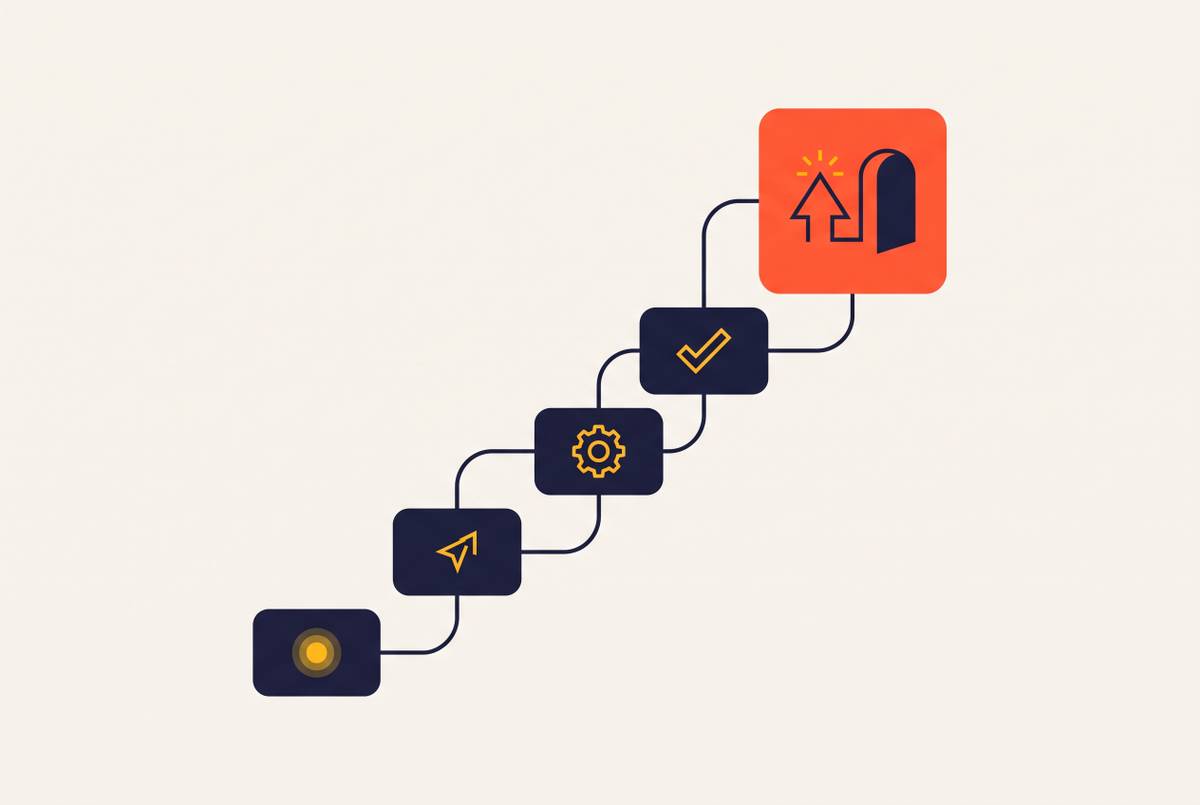
Once quality is accounted for, the format decision mostly comes down to where the buyer sits in the funnel, and this is where the framework actually earns its keep.
At the awareness stage, narration wins clearly. A buyer who isn't ready to evaluate features yet is responding to something more emotional: does this product feel like it was built by people who understand the problem? Dual-channel encoding and a human presence on screen build that feeling fast, and text simply can't compete for attention at a stage where attention is scarce and skeptical.
At the evaluation stage, the right call splits based on product complexity. Walnut's 2026 B2B data backs up the general shape of this: demos aimed at buyers closer to a decision produce meaningfully stronger conversion lift than demos aimed at pure awareness, which confirms a simple rule. The format has to match what the buyer is actually ready to process, not what's easiest to produce.
There's a third context that deserves its own mention: async sales communication. A short, personalized narrated message attached to a proposal or follow-up carries tone and emphasis that a bulleted recap never will. In that setting, the narration is really about the person sending it: they took two minutes to record something specific to this one deal.
What Dock's async approach reveals about narration in the post-sale relationship
Post-sale onboarding is where narration's real value shifts from information delivery to something closer to presence. A checklist can tell someone to "connect your billing integration by Friday." It can't tell them why that step matters for the exact outcome they signed up for, and it definitely can't make them feel like someone on the other end is paying attention to their account specifically.
This narration isn't demonstrating a feature; it's adding context and a sense of a real person to tasks that would otherwise feel like homework assigned by a bot. Text still does the heavy lifting on structure (the task list, the steps, the reference material that gets revisited later). Narration adds the sense of presence that signals an actual person is paying attention.
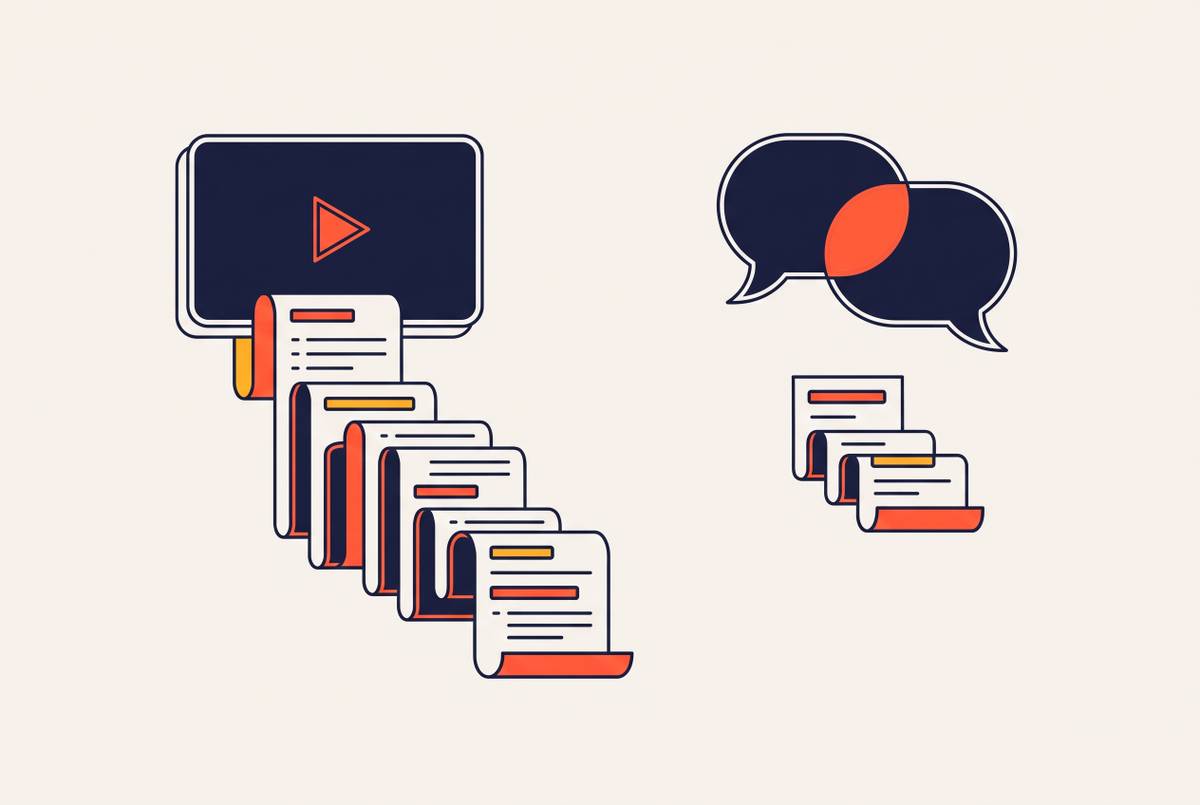
This pattern points toward a hybrid approach that recurs later in this piece: text for structure and reference, short narrated segments for context and connection. None of this works, though, if producing a quick narrated clip takes as long as writing the onboarding doc it's replacing. The approach depends entirely on narrated video being fast and low-friction to make, and the next section takes on how to produce it that way.
How AI-assisted production changes what narration quality costs to achieve
The old argument for text-only was partly a production argument: narration demanded a mic, a quiet room, editing software, and the kind of patience most small teams don't have lying around. That gap is closing, because AI now handles a lot of the specialist work that used to make narration expensive, including audio cleanup, pacing adjustments, captioning, and transcript-based editing.
Voice cloning changes the math on consistency in particular. One important legal line sits inside that process: cloning is fine for your own voice, or someone else's voice with their explicit consent. Cloning anyone else's voice without permission is illegal.
This same toolkit also softens the maintenance problem that's long been narration's weak spot. AI-generated captions and transcripts close most of the accessibility gap too, since a narrated demo with accurate auto-captions reaches nearly the same audience a text page would, without anyone typing out a transcript by hand.
None of this means the quality threshold has vanished. In high-trust, relationship-driven sales moments (an enterprise deal, a personalized proposal to a buyer who's met your team), a recognizable human voice still signals something that a cloned voice doesn't reliably replicate. AI narration is a strong substitute for documentation and onboarding content where the point is clarity. The honest takeaway is that the bar is now reachable for most teams, not that the bar has disappeared. How much of this stays practical rather than theoretical comes down to the specific tool a team uses to record and edit, which is the next question.
Choosing a tool that supports both formats without adding a second workflow
Format choice matters because the best decision in the world falls apart if producing either format requires switching between three separate pieces of software. The strongest setup is one tool that handles recording, editing, and sharing for both narrated and text-supported demos, so the format choice stays a strategic one instead of being quietly decided by whatever's easiest to open.
Tella fits that description for teams producing narrated product demos, async video messages, and onboarding content without a dedicated video editor on staff. Tella runs as a web app, a Chrome extension, and native Mac and Windows apps, fitting into whatever recording setup a team already has. That range covers the full set of use cases this piece has walked through: quick video messages, social-style demos, onboarding walkthroughs, and longer product tours, all without switching tools between them.
Other tools serve narrower slices of this same job well. CapCut brings a strong AI feature set for short-form, social-style output, including automatic filler-word and silence removal, though it has no hosting platform or viewer analytics outside its Commerce Pro tier, which makes it a better fit for distributed short clips than for an embedded product demo living on a pricing page. A Google Gemini integration was announced in May 2026, with no confirmed launch date, to bring CapCut's image and video editing tools into Gemini; the script, caption, and voiceover generation features themselves already exist natively in CapCut. A Color Mode beta, introduced in April 2026, redesigns color grading inside Premiere for editors working at that level of polish.
A practical decision framework for choosing the right format
The format decision gets a lot more reliable once it's run through four questions every time: what does the buyer actually need to do with this content, how confident is the team in its current narration quality, how often will the underlying product change, and is this moment about building a relationship or handing someone a reference they'll come back to later.
Narration is the right call when a buyer is still at the awareness or early evaluation stage and needs to feel something about the product before they're ready to compare feature lists line by line, or when the moment calls for enthusiasm, sequence, or emphasis that text formatting simply cannot carry no matter how many bold tags get thrown at it. It's also the right call for async sales outreach or a personalized onboarding message, where the human voice behind it is the actual point of sending it, and for any team that can reliably deliver clean audio and confident pacing, whether that confidence comes from practice or from AI-assisted production closing the gap.
Text-only is the right call when buyers need to scan, search, or come back to the same material more than once, which describes most documentation, comparison pages, and reference guides. It's the right call when a product's UI changes often enough that re-recording would eat more time than the engagement boost is worth, when the audience has accessibility needs the current workflow doesn't yet support in video, or when a team's narration quality simply isn't there yet and a clean, well-organized text walkthrough will read as more professional than a shaky recorded one.
The two formats aren't mutually exclusive, and the Dock and Asana examples make that case well: the strongest post-sale demos often pair a short narrated segment, carrying context and the sense of a real person behind it, with text-based structure handling the action items and steps someone will refer back to later. And none of this is a permanent assignment. A team that starts with text because that's what its current tools and confidence allow can layer narration in as both improve, revisiting the same four questions as the product, the team, and the buyer all change. The format debate matters far less than building the habit of asking, every time, which format actually fits this particular moment.